
On the web
Somebody in the bandis also the tour manager.
You booked it. You worked out the routing. You are chasing a promoter for a contract, adding the hotel you found at midnight, and you are also playing the set. Nobody handed you this job.
This is the part of Tourouter built for that. A real screen, a keyboard, and the whole run in front of you.
No card needed. Planning is free for as long as it takes.
The work, in the order you actually do it
A tour is not one task. It is six, spread over months, and every one of them is easier with a keyboard in front of you.
- 01
Get the dates down
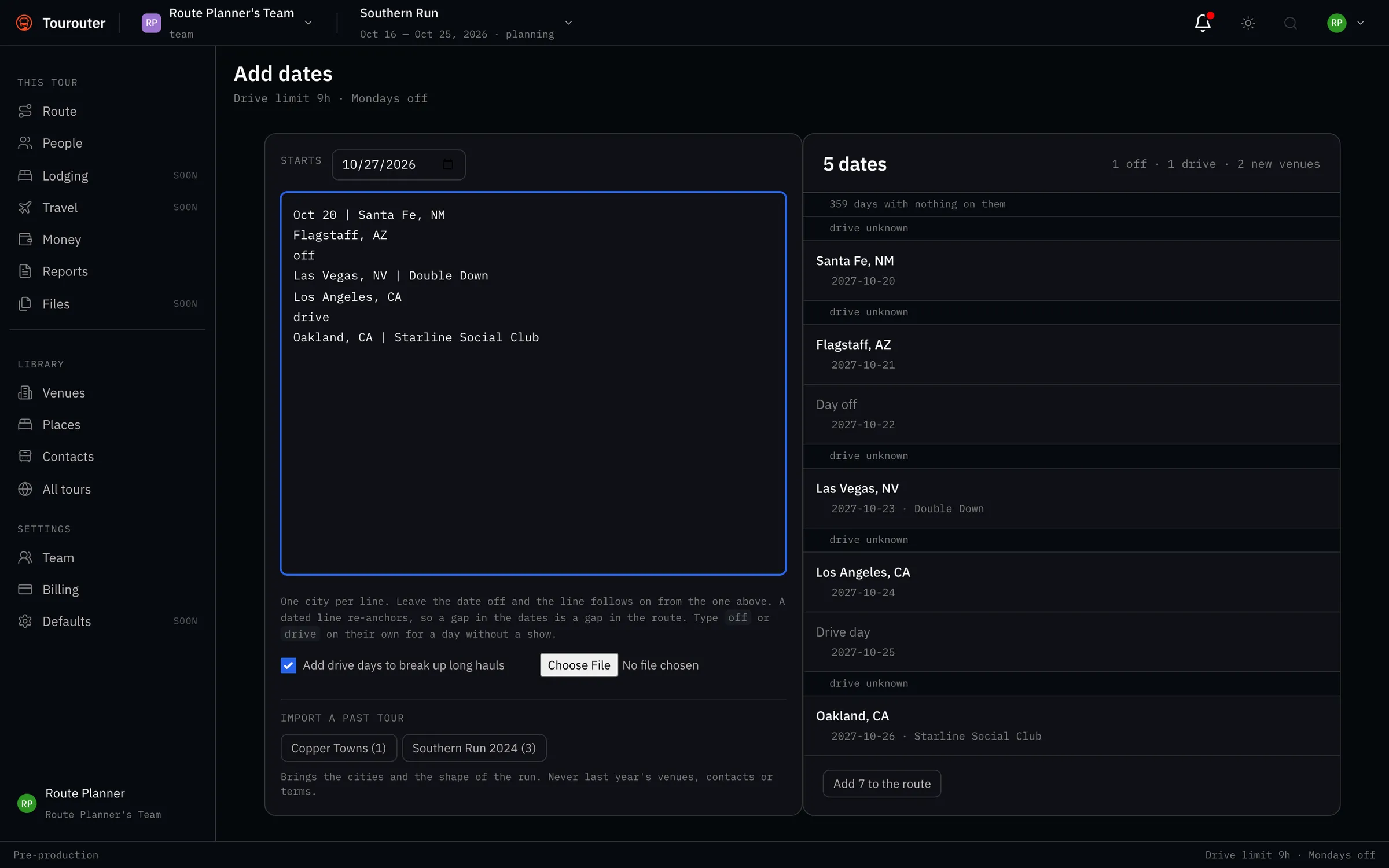
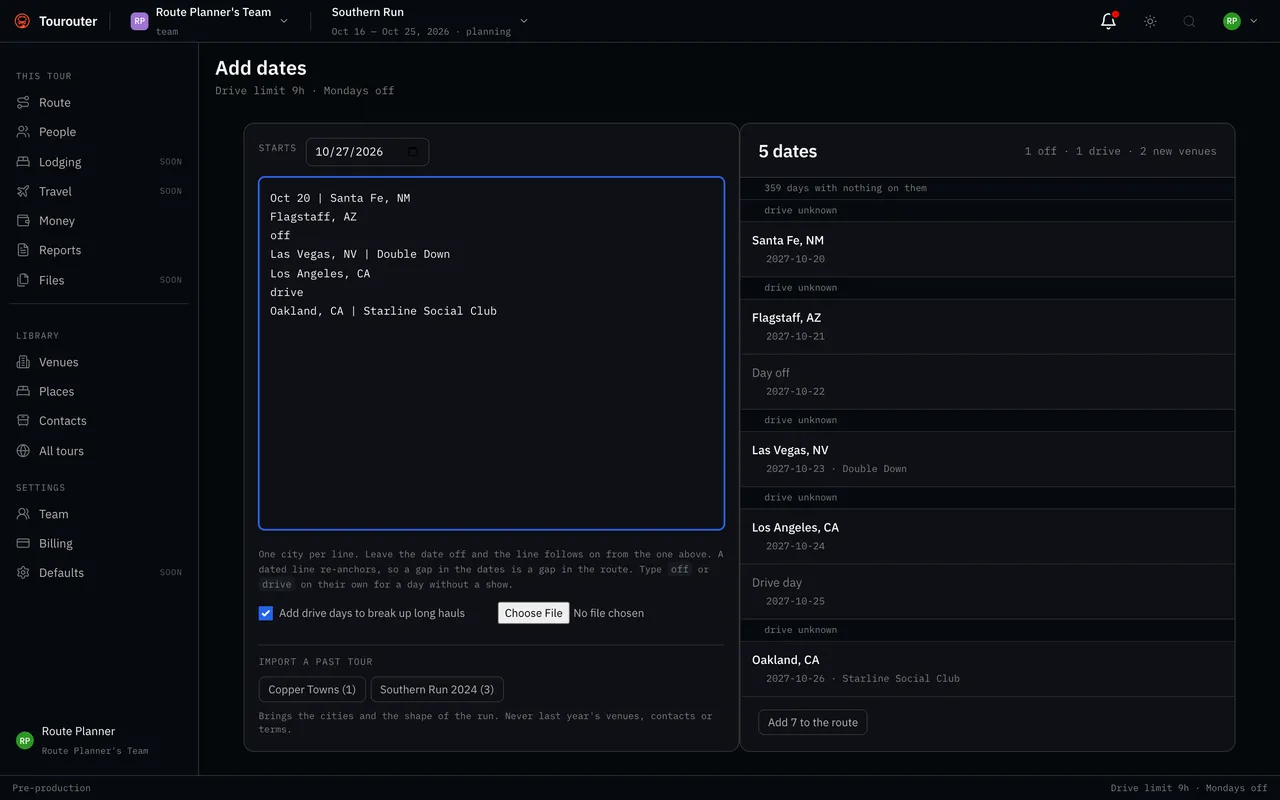
Type a city, press Enter, type the next one. Or paste the list you already have: a promoter's email, a column out of a spreadsheet, a pipe table.
Twenty dates is twenty rows of typing. This is the one part nobody wants to do on a phone.
- 02
Make the routing make sense
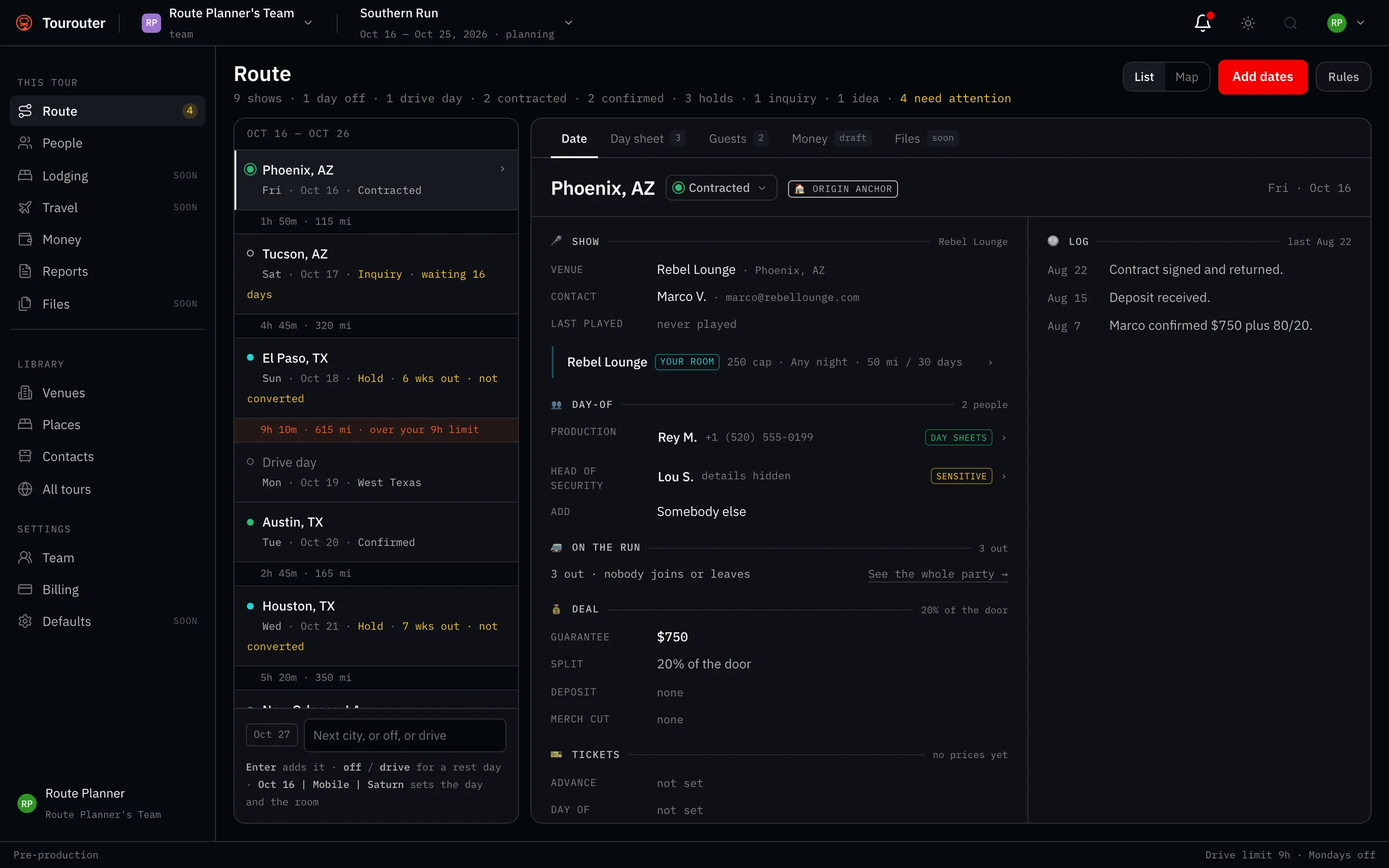
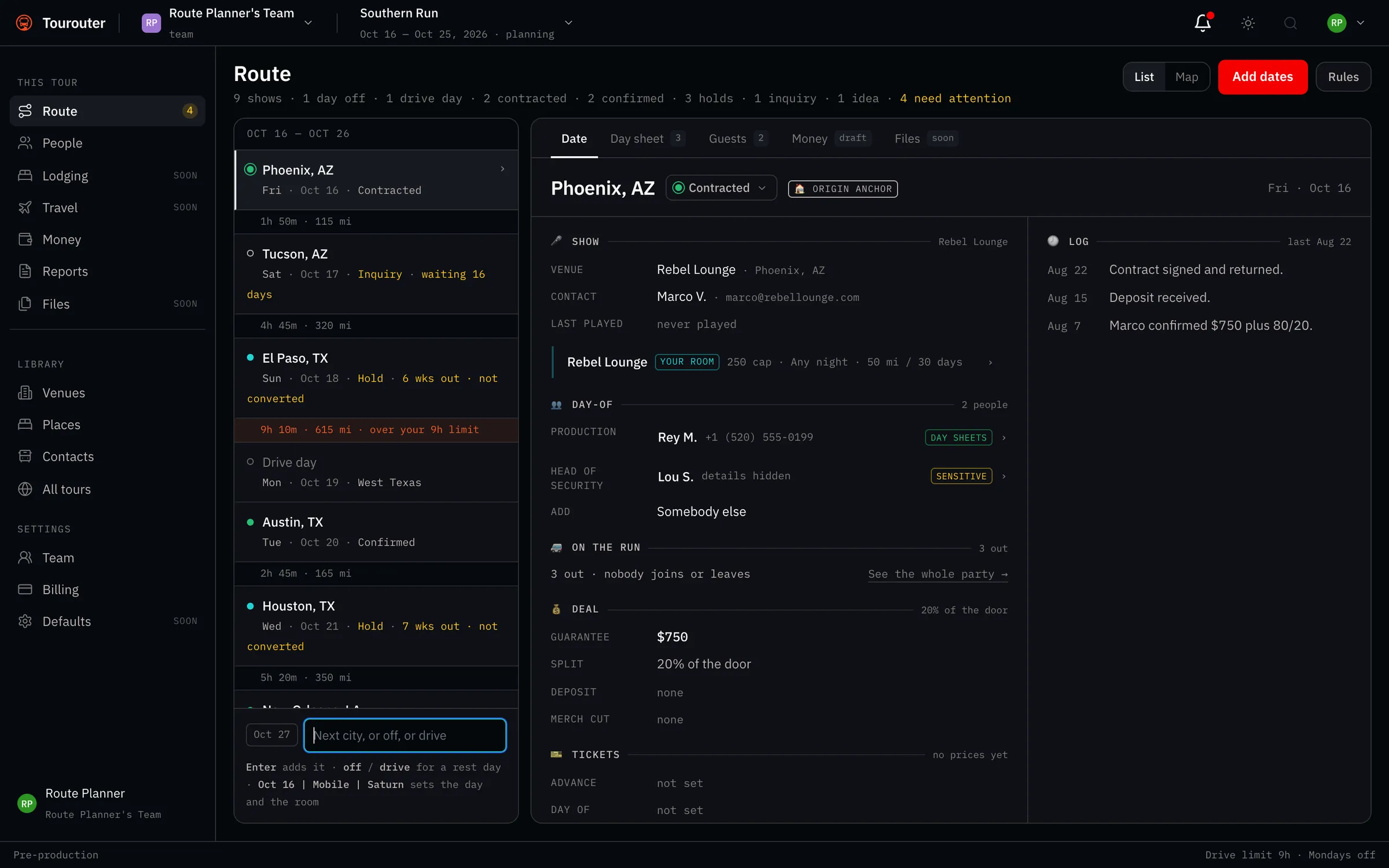
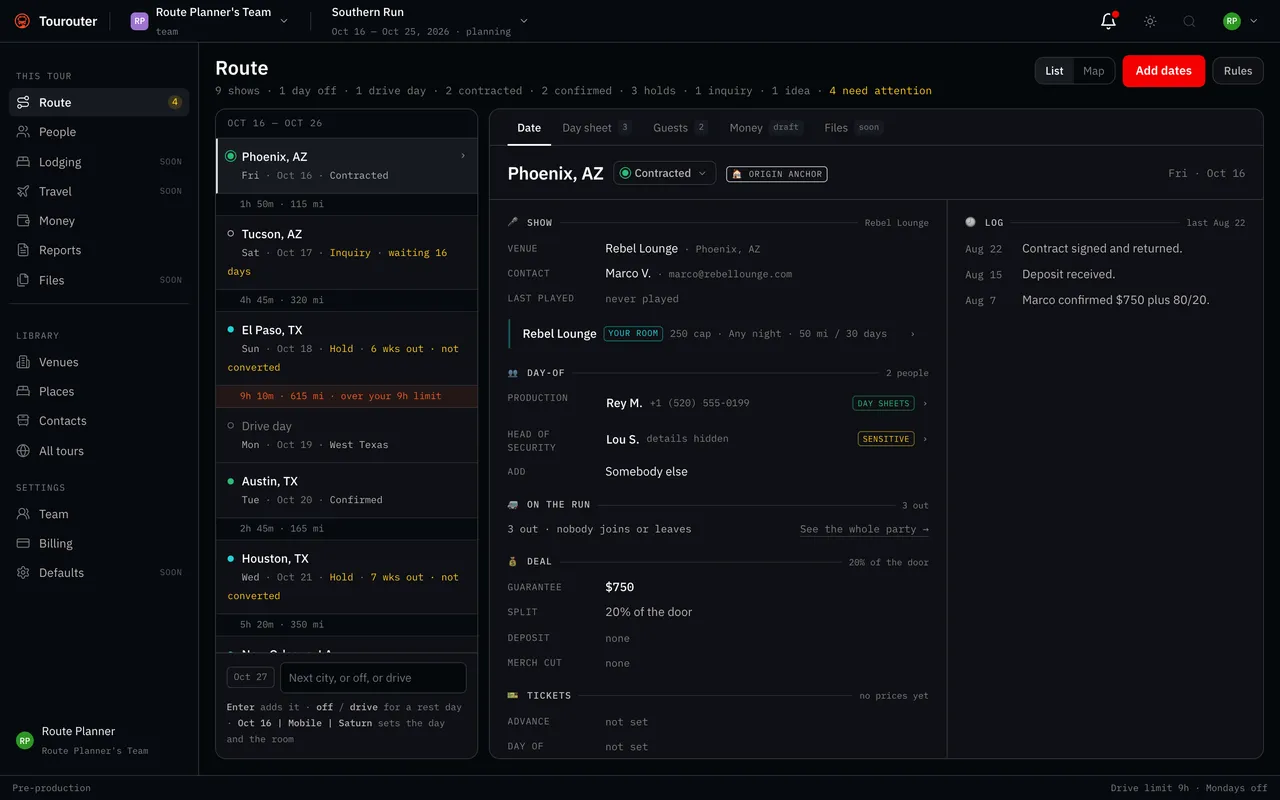
See the run city by city, with the drive between each one. Find the day you booked yourself nine hours apart before the van does.
Set your drive limit once and anything over it turns red while the date is still an idea.
- 03
Look at the shape
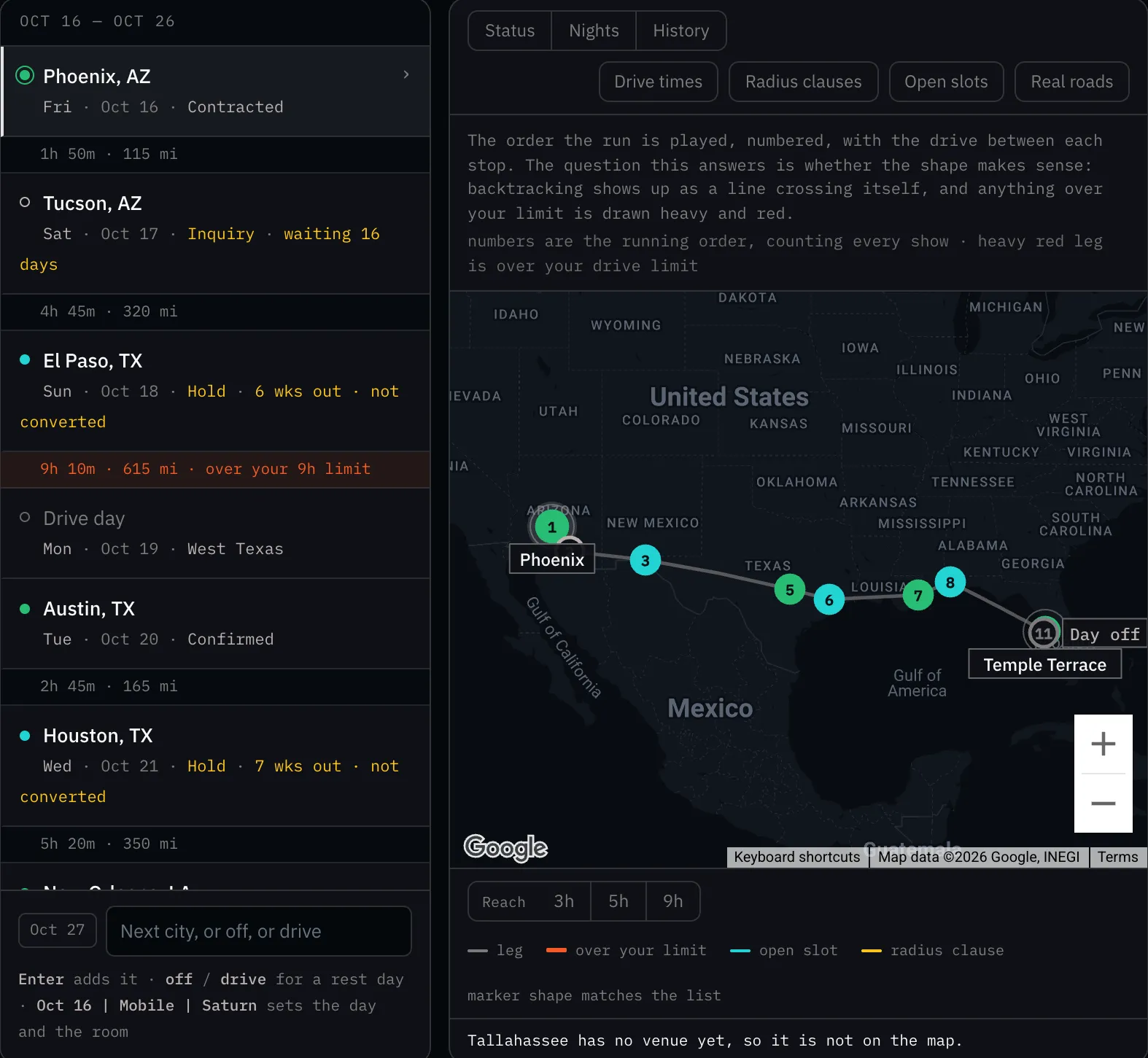
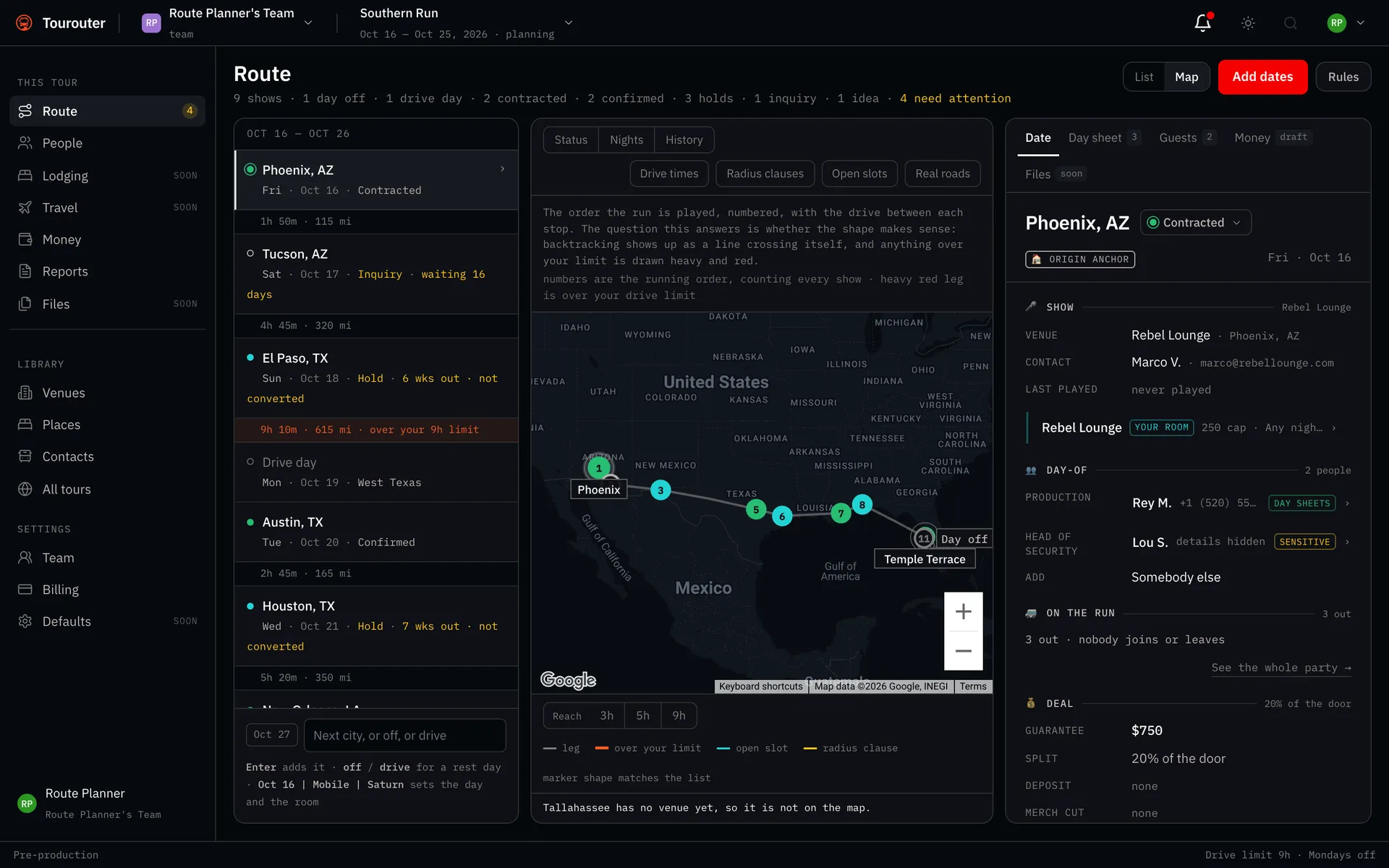
The same run on a map, numbered in the order you play it. Backtracking shows up as a line crossing itself.
A routing can look fine as a list and be obviously wrong as a shape.
- 04
Work the holds
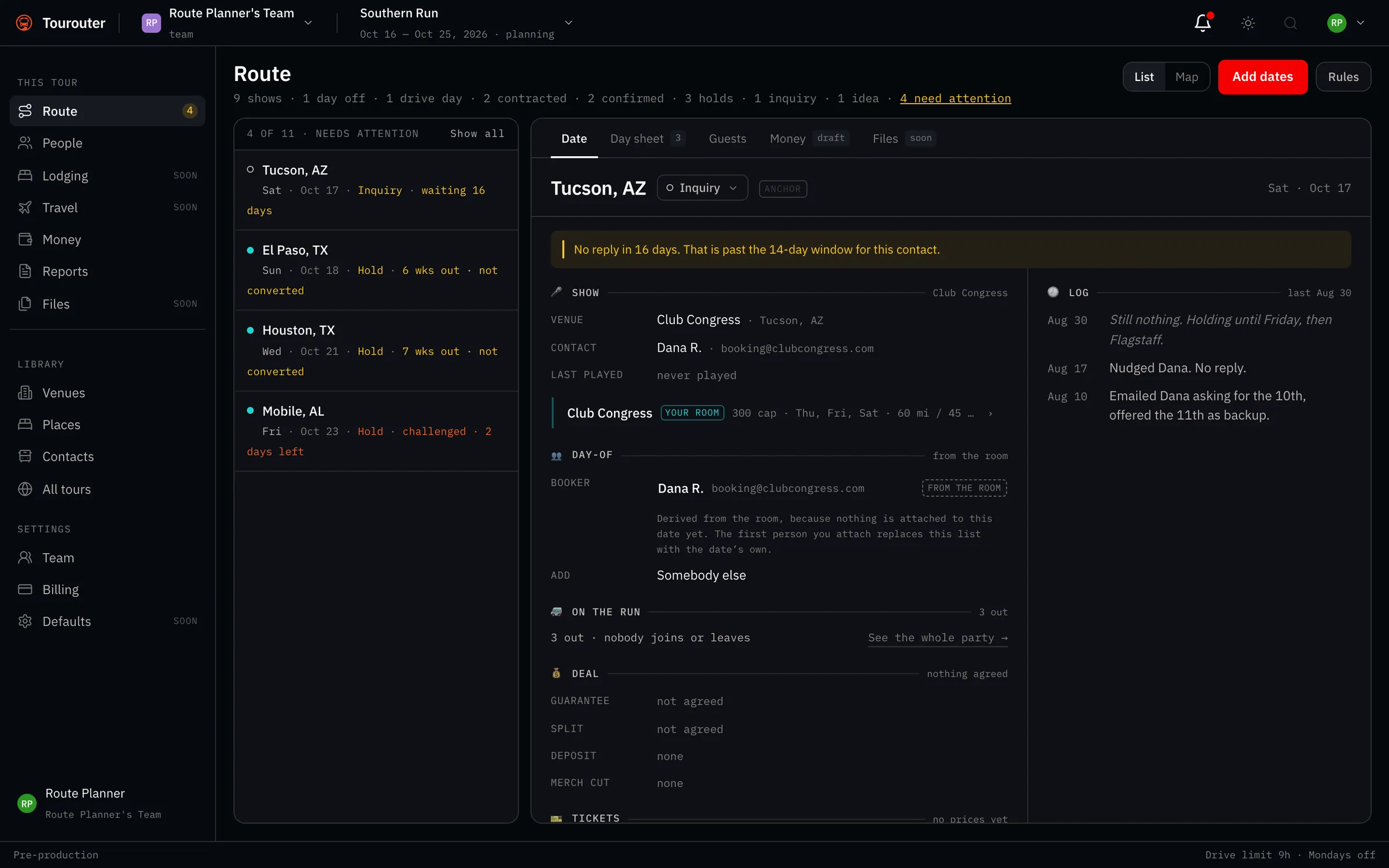
Idea, inquiry, hold, confirmed, contracted. Every date carries where it really stands, and the board counts them for you.
A hold six weeks out that nobody has converted is the one that costs you the run. It says so out loud.
- 05
Build the day, and keep the money straight
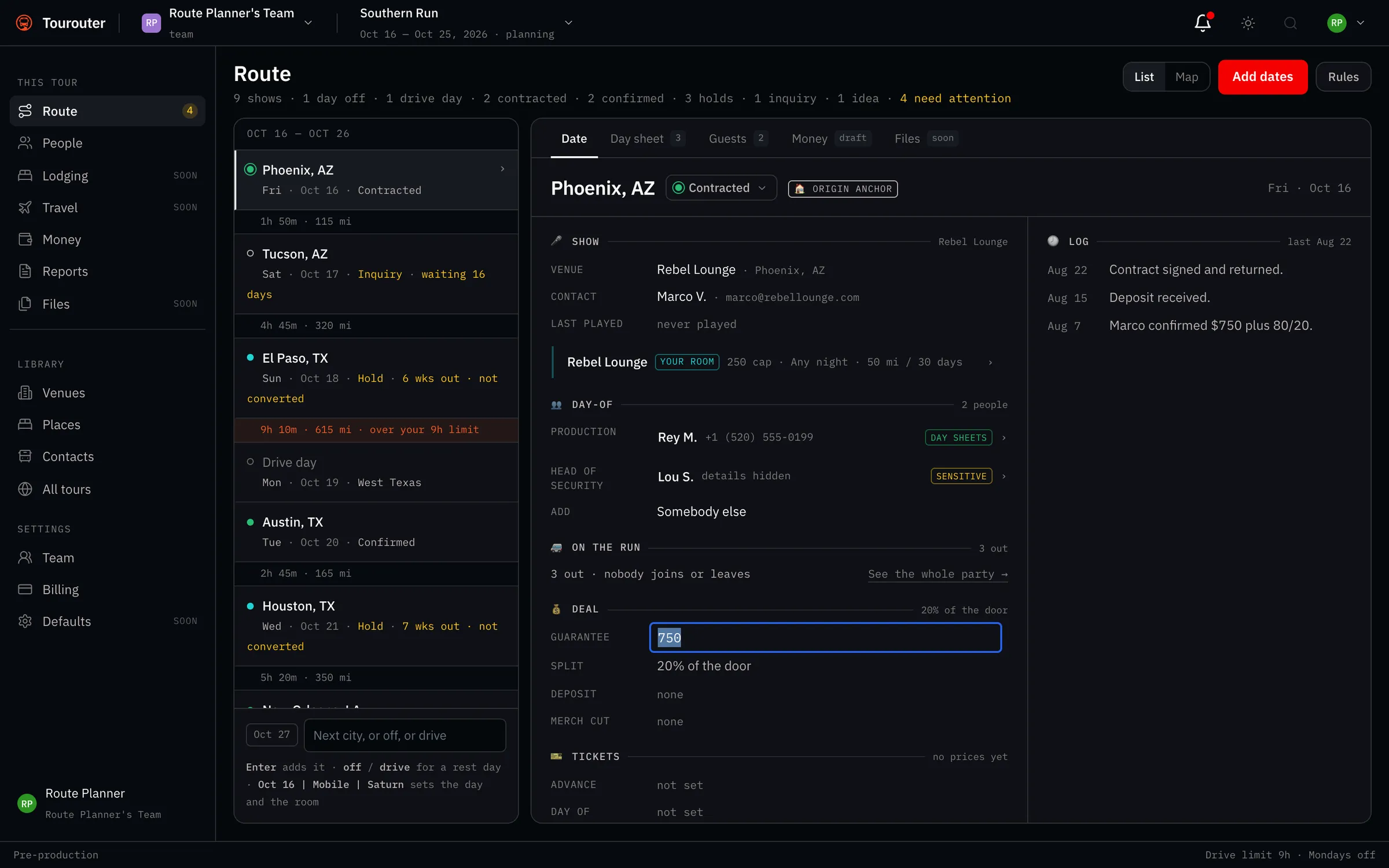
Load in through set time, the venue, the room, the guarantee, the split, the deposit, the merch cut. Click a value and type.
This is the day sheet the whole band opens on their phone. You only build it once.
- 06
Hand it to the band
Invite everyone, set who can change what, and add anyone outside the band who should get the day sheet by text each morning. Then you are done explaining.
Crew and team are on the text list by default, and any contact can be switched on, so the driver and the promoter's runner can be on it without an account. Crew seats are free and unlimited, and you are the seat that costs anything.
Paste what the promoter sent you.
One city a line. Leave the date off and the line follows on from the one above. A dated line re-anchors everything under it, so a gap in the dates is a gap in the route. Type off or drive on their own for a day without a show.
It counts what it found before anything is written: how many dates, how many days off, how many venues it has never seen.
On the phone, the same door takes a photo of the flyer or the promoter's PDF. The app reads it into the same kind of draft, and you review it before anything is created.
A routing can look fine as a list and be obviously wrong as a shape.
The same run, drawn in the order you play it, with the drive between each stop. Backtracking shows up as a line crossing itself, and a leg over your limit is drawn heavy and red.
- Running order
Numbered by the night it is played, counting every show. The number is the answer to “so what is date seven”.
- Over your limit
A leg longer than the drive you set is drawn heavy and red, on the map and in the list, before anyone has promised anything.
- Open slots and radius clauses
Turn on what is still free and how far each clause reaches. Ask what is within three, five, or nine hours of any date on the run.
Know which dates are actually real.
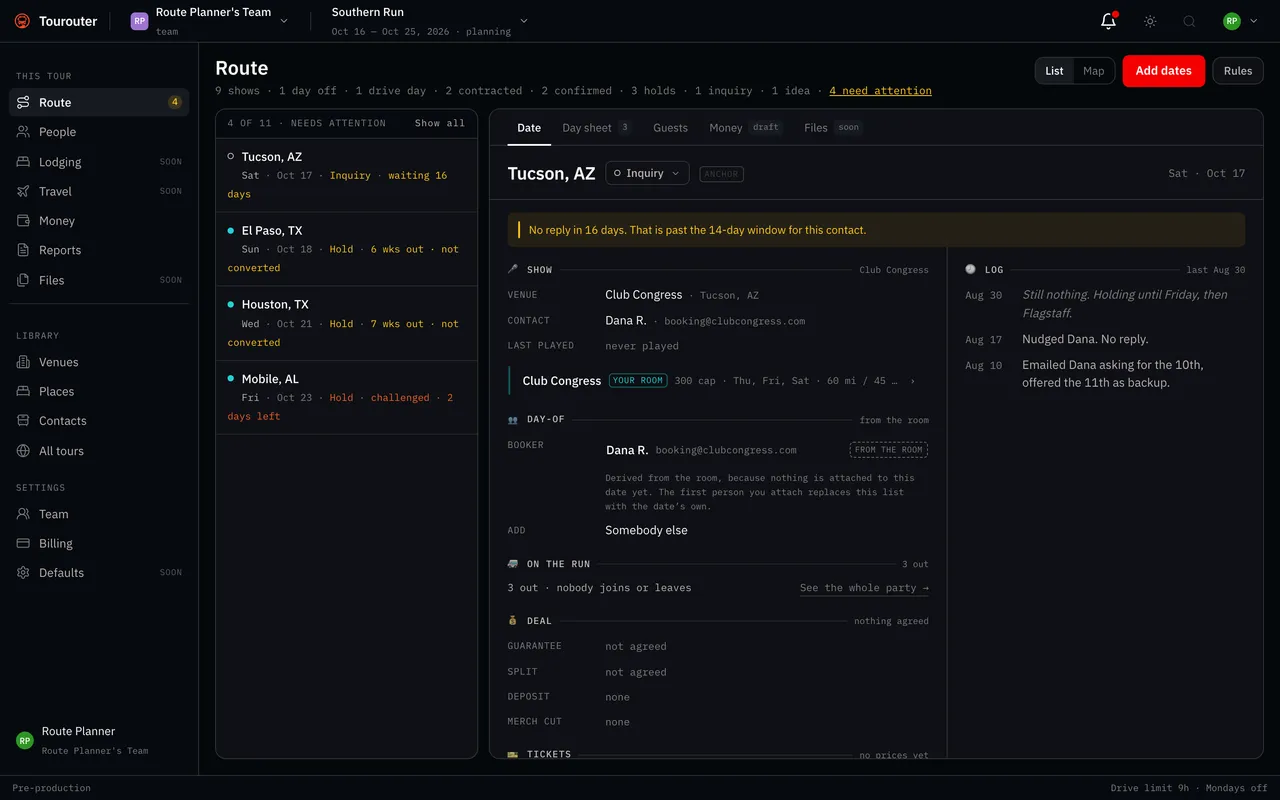
Idea, inquiry, hold, confirmed, contracted. Every date carries where it really stands, and the counts sit across the top so you can read the run without opening anything.
A clock runs on each one. One click shows you only the dates that need you today.
Change it where you are looking at it.
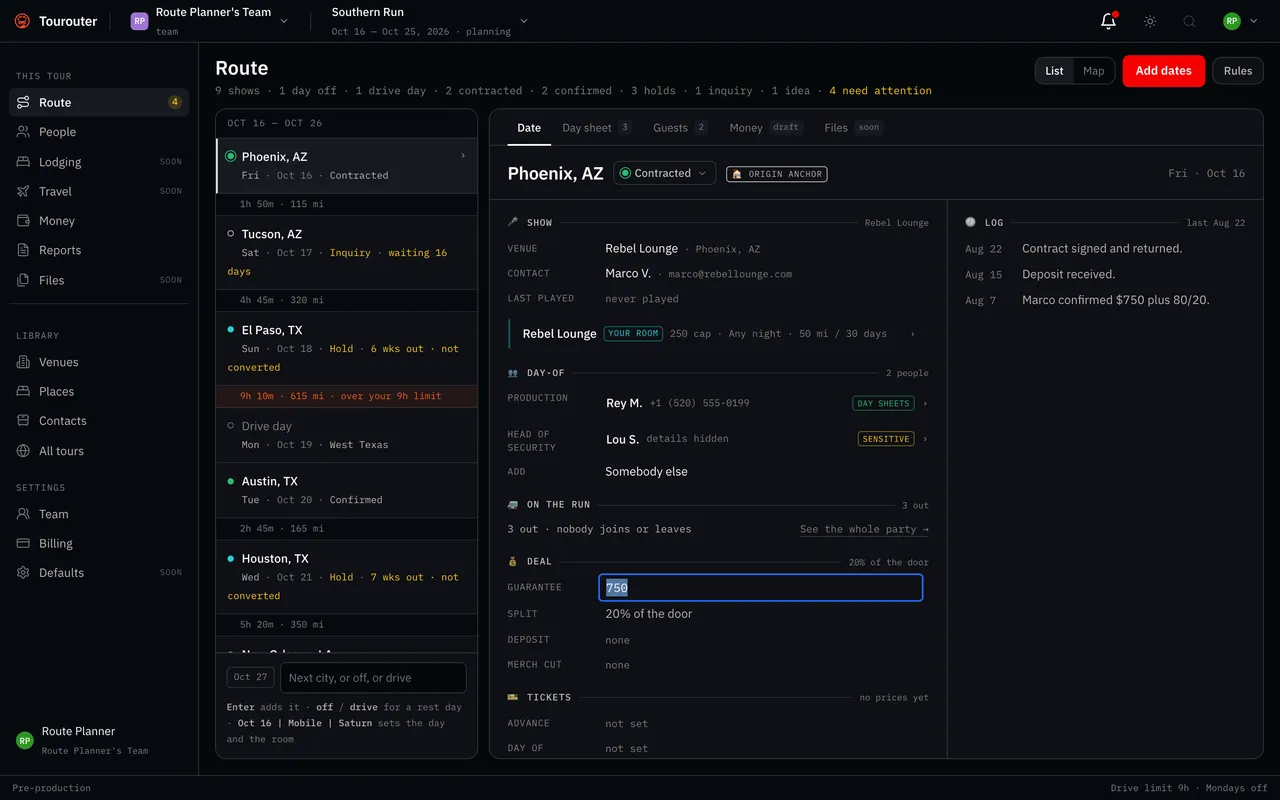
Click a value and type. The guarantee, the split, the deposit, the merch cut, the venue, the room, the people who matter on the day. Nothing opens a modal, and the board does not redraw underneath you while you are typing.
Contacts marked sensitive stay hidden from the people who should not see them, on the same screen as the ones who should.
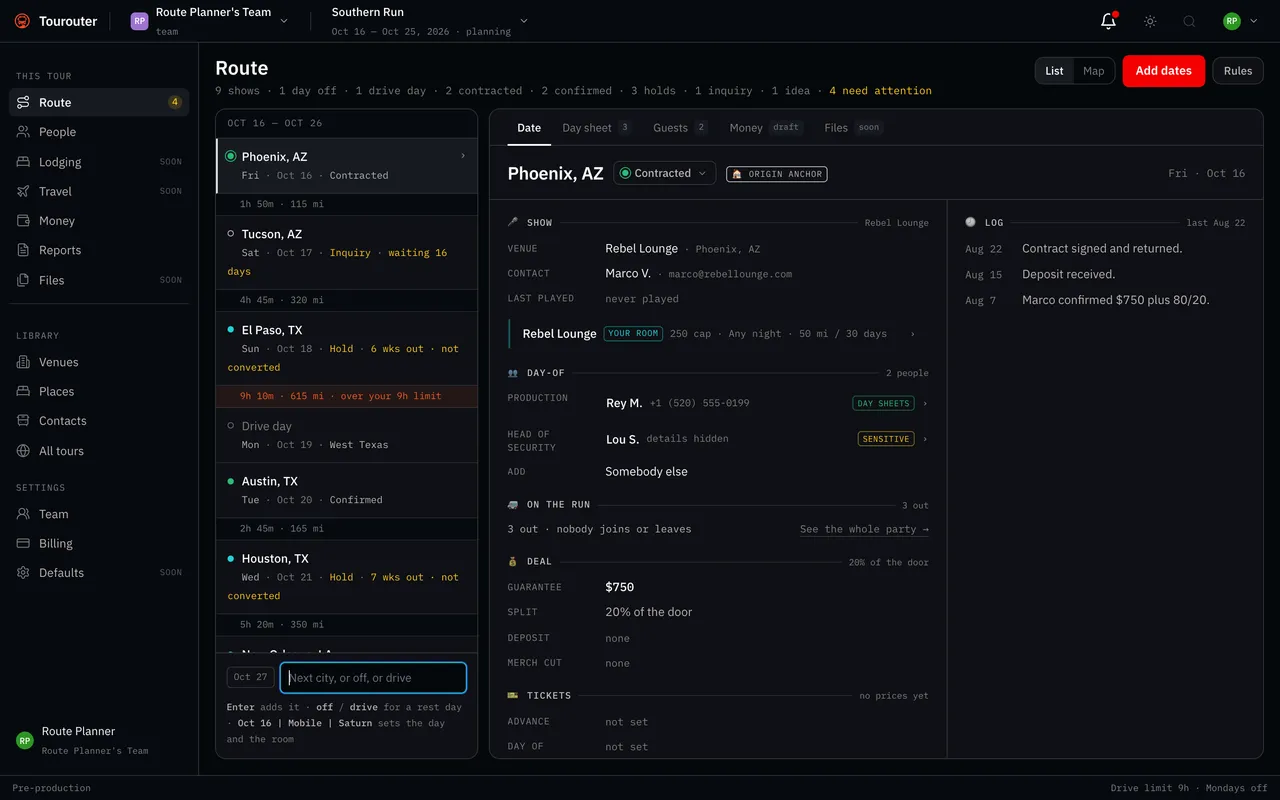
What was agreed, written down.
Every date keeps a dated record beside the deal it belongs to. Contract signed and returned. Deposit received. What the promoter said on the phone back in August.
Six weeks later, when the number is the thing nobody can agree on, it is written down next to the number.
Six things down the side, and that is the whole job
No modules to buy, no setup wizard, nothing to configure before it is useful. Pick the tour you are working on and everything below it belongs to that tour.
- Route
- Money
- Reports
- Venues
- Places
- Contacts
You build it once. They just open the app.
Everything you put in at the desk is what the band sees on show day. Change a set time from the van and every open screen updates by itself, and everyone gets told.
See what the app does on the road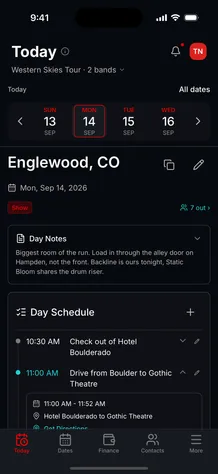
Open a laptop. Start the run.
Build the whole thing before you owe anything. Payment happens when the tour goes live, not while you are still working out whether it can.
No card needed to plan your tour.