


Who are you?
Before the first booking email goes out, a promoter needs to know what you sound like, what you look like and where to hear you. Tash on describing your sound, building a visual identity, the one sheet, and finding out how each person wants to be contacted.
Describe your sound
One big jumping off place is to have an idea of how to define your music. Everyone has a very unique voice and artistic identity. However, it’s really helpful for people you work with to get a summary of your sound and also see if you can fit into specific subgenres and scenes. You may have had other people describe your sound to you or you can also think of your influences. Perhaps you fit squarely in a particular genre, or you maybe a hybrid and an amalgamation of several different styles. Whatever the case, you can have fun and get creative in your description.
When I’m introducing myself and my band to people I’d like to work with, I include the description of our sound in order to give them an idea of what they’ll be stepping into. In our case, we are a hybrid band, which helps us navigate different subgenres. I like to include some of our influences in our description, which gives people some familiar sounds to relate with what they’re going to be hearing in your music.
Christian Petke has run COP International, the label behind Stabbing Westward and a long list of industrial and darkwave acts, for over thirty years. On episode 43 he said the question at the top of this post is the one he asks every band he signs.
From episode 43 · September 20, 2026
Christian Petke
Christian Petke of COP International on marketing as storytelling, and why the first job with any band is finding out who they are.
“I realized marketing is all about storytelling. Telling those stories, making it exciting, finding the core of someone, helping them to refine themselves. It’s so fun to look into. Who are you?”
That is the whole exercise. A sound description is not a genre tag, it is the first line of the story a promoter will tell their audience about you.
A face to go with the name
There are definitely instances of bands like Sleep Token who perform as anonymous artists. However, even they have images and art created to help identify who they are visually. Creating a visual identity with your logo, pictures, and images are part of what will help people identify who you are. Plus you’ll need that logo when creating flyers for your shows. More on that later. We’ve definitely had our share of growth and evolution in terms of trying to figure out how to create visual identities for our band. For us, we’ve loved working with other artists who are really talented in their crafts and able to help to shape that aspect.
Jared Christianson has fronted the technical death metal band ARKAIK through years of touring. On episode 2 he was asked what he would do differently if he started over, and the answer was about presentation as much as songs.
From episode 2 · March 4, 2024
Jared Christianson
Jared Christianson of ARKAIK on what he would invest in first if he started the band again, and on how promoters want to be approached.
“You can’t really market crap. It makes it so much easier if you have really good music that somebody just hasn’t heard. Half-baked brand, half-baked recording, half-baked everything. If I were to do it again, it would be: invest in a good logo, good artwork, good photos, recording.”
Good photos are the part most new bands skip. A promoter is going to put your picture on a flyer and a venue is going to put it on their calendar, and a dark phone shot from the back of the room is what they will use if that is all you gave them.
Somewhere to hear you
I know this probably goes without saying, but having places where people can listen to your music and get a feel for who you are is vital. Some people prefer certain platforms over others. Whatever your preference, it definitely helps to have a place to hear your music and even some videos if you have those of you playing live. When I’m looking for other bands to play with, I like to get a feel for what they sound and feel like live. I often go to youtube to check out videos and dive into all the platforms to really get a sense of them.
There are definitely exceptions for some bands who mainly play locally and have zero social media presence…yet are amazing and can pack a room. However, those bands might have a difficult time booking shows outside their local city if trying to meet new people outside their home network.
The one sheet
Once you have your pictures, logo, art, and some kind of media presence around your band, you’ll want to create some kind of electronic press kit or one sheet that includes all your information when contacting venues, promoters, and other bands initially. I have a one sheet that we created that includes pictures of the band, a short description of our sound, links to our socials, press links, contact info, and accolades. If you’re completely new, then it might take some time to build up the press links and accolades. However, just having the information and pictures is sufficient to start working on booking shows.
Two promoters on the podcast have described the same document from the receiving end. Elizabeth Inglese books shows in Seattle as YES Music Productions, and on episode 9 she put it in terms anyone who has applied for a job will recognize.
From episode 9 · March 10, 2025
Elizabeth Inglese of YES Music Productions
Elizabeth Inglese of YES Music Productions on the press kit as a job application, and why a stylized one tells her who you are.
“A lot of these talent buyers do not have time. They’ve got a million requests coming in for shows, and they’re not going to go and research you and your band. You’re a brand new band, you better have it all. It’s like applying for a job: here is me in a snapshot and a pretty little package, all the links are here. I love when a band’s EPK is a little stylized. It’s going to have that vibe. That’s your persona.”
Krystal Garcia of Distorted Heartbeat books in Dallas, and on episode 18 her version was shorter still.
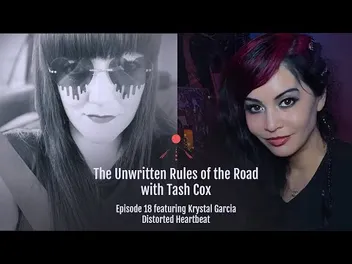
From episode 18 · June 13, 2025
Krystal Garcia of Distorted Heartbeat
Krystal Garcia of Distorted Heartbeat on the one paragraph and one link she actually wants in a booking email.
“As simple as you can make it. A paragraph with just a basic description of what your music sounds like, and maybe also who you’ve played with. A simple little paragraph and a link to all of your music, whether it be Spotify, Bandcamp, whatever. That’s the easiest way.”
Between the two of them, that is the one sheet: a paragraph on the sound, who you have played with, one link that leads to everything, and a look that matches the band. Krystal added one more thing in the same breath. A band that writes with a specific date in mind gets further than one that asks about “October or November.”
Find out how they like to be reached
When I first find a contact to reach out to, I research their preferred way of communicating. Most people prefer email, but I’ve also worked with people who only like to DM on Instagram or Facebook or even prefer phone calls and texts. I recommend taking the time to see how people prefer communication, as you’ll only get one chance to make that first impression. I’ve seen plenty of promoters have their online rants about getting annoyed by DMs versus emails. If nothing is indicated, I’d say use your best judgment. I myself like using email, as I can construct a signature with links and easily attach our one sheet. I know some bands use an EPK with an online digital link to their one sheet as well.
Jared had noticed the same rants, and the same exceptions.
“A lot of people are like, please email me. Don’t DM me on social media, just please email me. Then there could be a promoter who’s not a band, not an agent, but they do shows in Las Vegas. What’s their preferred method of contact? Maybe it’s Instagram DMs.”
The preference is usually posted somewhere. Check the venue’s booking page, the promoter’s bio, or the pinned post on their account before you write. The people who want email usually say so because they file every show in a folder, which is also why an email to them rarely gets lost.
Before you hit send
A note of caution when creating that first message. Make sure if you’re copy and pasting the message that you do find a way of being specific and unique to that person. It’s that much more meaningful if you’re reaching out to someone that might have a connection to a friend you already know. Also, make sure to include the correct date and venue for the show and also address it to the right person. If you’re wondering why I share the latter advice…yes, I’ve TOTALLY messed all of the above up. 🤦🏻♀️ I believe in you and that you can bypass some of the clumsy tash mistakes. 😉