


How to advance a show
Advancing is the conversation you have with the venue before you arrive. Here is what goes in it, from a promoter, a headliner who runs her own bills, and a tour manager who does it from a spreadsheet.
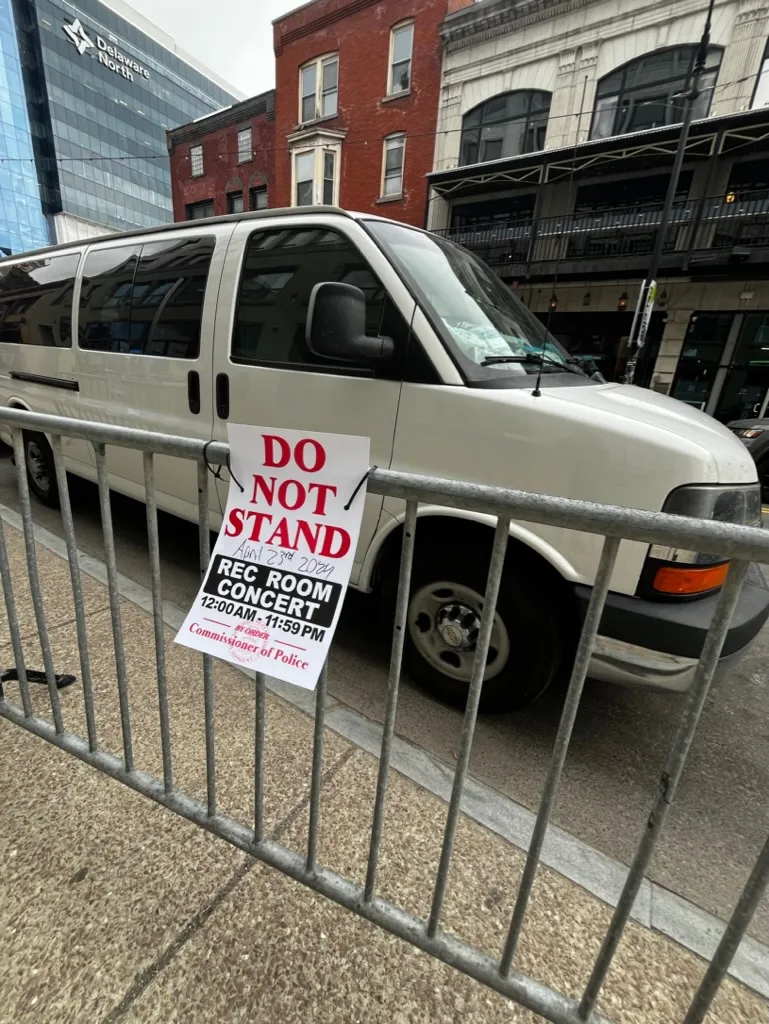
Advancing a show is the work you do with the venue or promoter in the weeks before you play it. You settle the times, the gear, the food, the money and the parking, so that on the day nobody has to guess. It is unglamorous and it is the difference between a show that runs and a show that lurches.
I do all the booking for AL1CE, and sometimes there is no promoter at all: it is me, and I am not even in that city. So I have had to learn what a good advance covers. Better still, I have had a promoter, a headliner who builds her own bills, and a road veteran tell me on the podcast. Here is what they said.
What you are actually asking for
From episode 21 · July 21, 2025
Curse Mackey
Curse Mackey on the advance spreadsheet, and the questions it answers once the tour starts.
Curse Mackey tour manages his own runs and, when he is out with Clan of Xymox, theirs too. The week before a tour he blocks out time to “start advancing all the shows,” which he described as contacting every venue to find out “what time, when, where, what, and all of that stuff.” It goes into a spreadsheet: promoter name, venue name, load-in time, how much you are getting paid, and the details on parking. The hotel goes in the same place, with the reservation, the price and the address. Episode 21, 20:44
The reason is not tidiness. Once the tour starts, everyone in the party asks him the same questions: “What time are we leaving tomorrow? When do we arrive? When is load in?” His answer: “The more you can just go, here’s everybody, here’s all that, then that’s good.” Episode 21, 22:07
That is the whole job. Get the answers before the tour, write them down once, and put them where everyone can see them.
What the promoter wishes you would send

From episode 9 · March 10, 2025
Elizabeth Inglese of YES Music Productions
Elizabeth Inglese on riders, backline and holds, from the promoter's side of the table.
Elizabeth Inglese runs YES Music Productions in Seattle, so she is on the other end of the advance. Her list starts with your tech rider. A tech rider is the document that says what you bring, what you need from the venue, and how your stage is laid out. She keeps a good one on hand to show bands who have never written one. Episode 9, 17:48
Then backline, meaning the amps, drums and stands you are borrowing rather than carrying. Her rule is to say what you need early, “not the day before.” Renting at the last minute works, but “that becomes a show expense that gets deducted from all the things before the artist gets paid, and nobody wants to deduct one more thing from the artist pay.” Given warning, she will “beg, borrow and steal” a keyboard stand from a friend instead. And do not trust the venue’s own kit sight unseen: “Even if it says that they’ve got a drum kit, well, the kick’s busted.” Episode 9, 18:25
Her summary was the old line, and she meant it: “Failing to plan is planning to fail.” Episode 9, 19:28
Two smaller things from the same conversation. Keep your hospitality rider honest, because she has bought the booze for bands who turned out to have been sober for five years. Episode 9, 32:41 And lock the date early. After the pandemic “every room was booked up everywhere,” and a band that waits finds there are no rooms left. Episode 9, 71:57
The part that happens at the door
From episode 37 · July 13, 2026
Naika Malveaux / DJ Whisperwish
Naika Malveaux on load-in doors, parking, and showing up on time.
Naika Malveaux promotes in Texas, and the basic thing new bands get wrong surprised me: “You’d be surprised how many bands don’t show up on time for load in.” He likes to be at the venue thirty minutes before everyone, to make sure the band knows “where the load-in doors are, where to park.” Bigger rooms will email all of that and expect you to follow it to the letter. Smaller rooms need you to be quick, because “we got another band coming behind you.” Episode 37, 23:35
Bellhead put the same point more bluntly. The venue tells you to be there at four for a seven o’clock soundcheck because “there is a history of bands being late. So don’t be that.” Episode 38, 59:00
So the advance has to capture the load-in time, the load-in door, and where the van goes. If the venue did not tell you, ask.
Advancing from the other side
From episode 42 · August 25, 2026
Nuda, SINE and Curse Mackey
Kaylie and Rona on sending the schedule months ahead, and on receiving one.
Kaylie of NUDA books and runs her own shows, and she treats every band on the bill the way she would want to be treated: “Here’s the schedule. I already put it together and sent it to everyone, so everyone knows all the details months in advance: the set times, when to load in, all the good stuff.” Episode 42, 69:48
Rona of SINE, who has been on the receiving end, said what every touring band feels: “It’s very appreciated when you don’t have to beg for the details, where you’re like, can you please send me our load-in time?” Episode 42, 70:17
If you are ever the one putting the bill together, that is the standard. Here is how Kaylie ran the Divine Creatures tour that way.
The checklist
Everything above, as the list I work from for each date:
- Load-in time, and the door it happens at
- Soundcheck, doors, set times, and curfew
- Backline: what they have, what you bring, what someone is lending you
- Tech rider and hospitality rider sent, and acknowledged
- The deal: guarantee, split, deposit, and who settles at the end of the night
- Parking for the van and trailer
- The day-of contact and their phone number
- The hotel, with its address and check-in time
Curse keeps this in spreadsheets, and a spreadsheet works right up until the tour starts and the questions begin. I now keep it on each date in Tourouter, next to the deal it came from, so the advance and the day sheet are the same information rather than two copies of it.
Quotes are lightly tidied from the episode captions. Each timestamp links to the moment it was said.